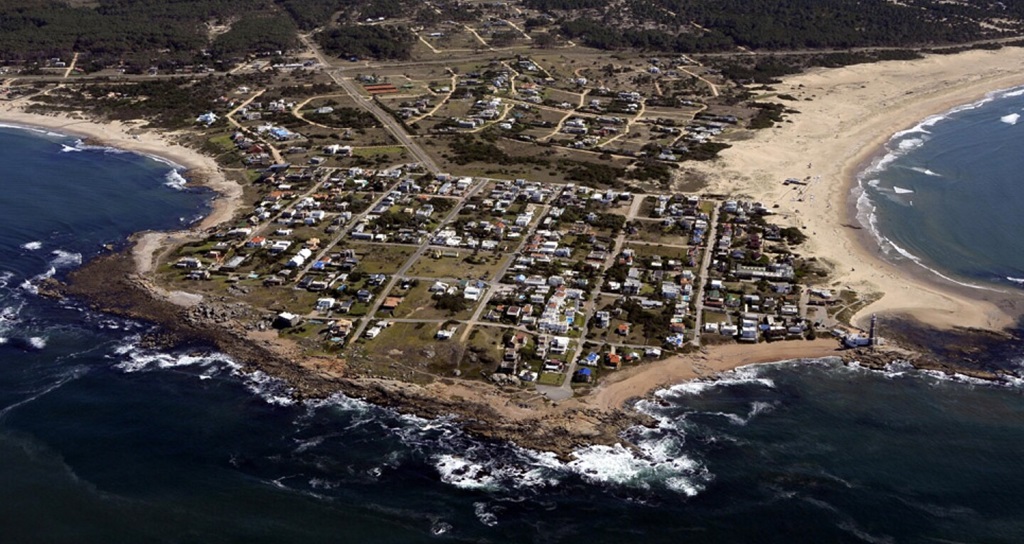
Whale season is underway on the Uruguayan coast. Southern right whales pass the beaches of Rocha and Maldonado roughly from July to October, and you can watch them for free from the shore: no boat, no ticket, no guide required. All it takes is a high spot facing the open ocean, a day with little wind, and a patient eye on the water.
Every winter, southern right whales migrate from sub-Antarctic waters to the temperate seas off Uruguay, Argentina and southern Brazil to breed. According to Uruguay's Ministry of Tourism, the Maldonado departmental government and Turismo Rocha, the season runs from July to October; the peak usually falls between July and September, when the arrivals are mostly pregnant females or mothers with calves, looking for calm water close to shore. This year, local media reported the season's first whale sighting as early as May off La Barra — a humpback whale, another species that also passes along this coast — a preview of what every winter brings.
Where to watch near Laguna Garzón: the classic spot in the area is the José Ignacio lighthouse, with an almost 180-degree view over the ocean. The ocean beaches near the mouth of Laguna Garzón also work well, as does any dune or bluff with some height above the sea between José Ignacio and the lagoon. If you are spending a few days in the area, our winter guide to José Ignacio and Laguna Garzón has a dedicated whale section with more detail, and the guide to right whales from the shore puts the whole plan — when, where and how to watch — on a single page.
Further east, in Rocha: La Paloma and La Pedrera are two of the best-known shore-watching spots in the whole country, thanks to their elevated rocky points. Cabo Polonio, Santa Teresa and Cerro Verde complete the Rocha circuit, and all of them make a good day trip up the coast from the Laguna Garzón area. In Maldonado, besides José Ignacio, frequently mentioned spots include Punta Colorada, Punta Negra and the Punta Ballena area.
How to watch: the best moments are usually early morning and late afternoon, on days with little wind and a flat sea. Look for the blow first: the right whale's spout is V-shaped and visible from a long way off. Then come the dark back with no dorsal fin, the pale callosities on the head and, with luck, a breach. Bring binoculars if you have them, a windproof jacket, something warm to drink and patience: half an hour can pass with nothing, and then a mother and calf surface just beyond the breakers. Sightings are never guaranteed, but on calm days at the height of the season the odds are genuinely good.
Clear rules: Uruguay has declared its waters a whale and dolphin sanctuary and, according to Turismo Rocha, a decree of Uruguay's Ministry of Livestock, Agriculture and Fisheries prohibits approaching the animals by boat, because it can disturb their normal behavior. On this coast, whale watching is usually done from land — which makes it accessible to everyone and safe for the whales. If you see a boat harassing the animals, you can report it to the coast guard (Prefectura).
Winter is prime wildlife season in the area: besides the whales, Laguna Garzón concentrates migratory and resident birds that can be observed all year round. If that interests you, also read our piece on birdwatching at Laguna Garzón and combine both outings in a single day: lagoon in the morning, ocean at sunset.
Sources: Ministry of Tourism of Uruguay; Maldonado departmental government; Turismo Rocha, Avistamiento de ballenas (July–October season and the fisheries ministry decree, checked on September 23, 2026); local Maldonado press on the first sightings of the 2026 season. Turismo Rocha is the website of OGD Rocha, Rocha's destination management organisation: a public-private body made up of the Corporación Rochense de Turismo (the private sector) and the Intendencia de Rocha, the departmental government, through its tourism directorate, with support from Uruguay's Ministry of Tourism.
Spotted an error? Write to hola@portalgarzon.com and we will fix it.