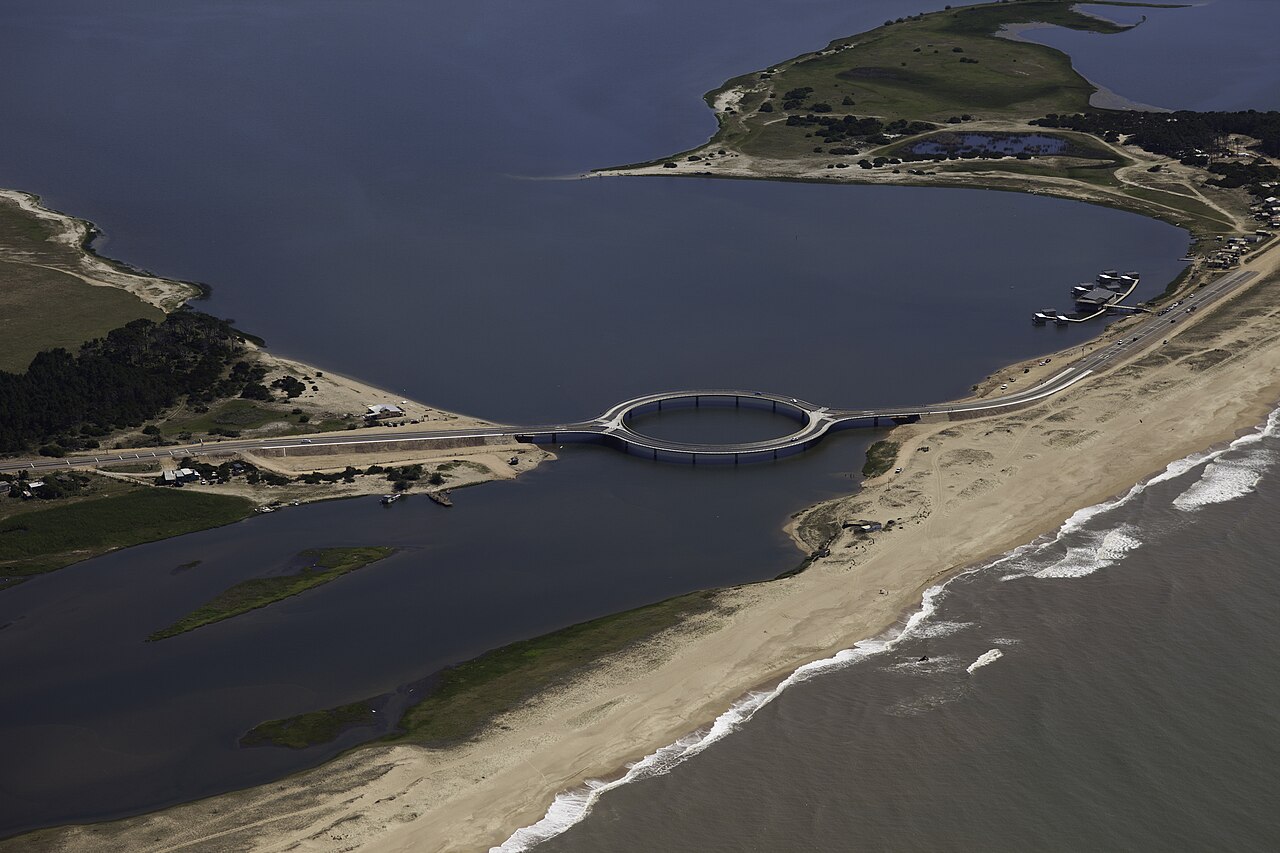
If you're near José Ignacio or Laguna Garzón between July and October, you can watch southern right whales without ever stepping onto a boat: a decree of Uruguay's Ministry of Livestock, Agriculture and Fisheries prohibits approaching the animals by vessel, so whale watching on this stretch of coast is always done from land. A high spot facing the ocean, a calm day and some patience are all it takes.
Every winter the southern right whale migrates from sub-Antarctic waters to the coast of Uruguay, Argentina and southern Brazil to breed and raise its calves. The season runs from July to October, with the peak between July and September, when arrivals are mostly pregnant females or mothers with calves looking for calm water close to shore before continuing their migration.
High points between José Ignacio and the lagoon: the José Ignacio lighthouse has an open, almost 180-degree view over the ocean and is the best-known lookout on this stretch. The ocean beaches near the mouth of Laguna Garzón, and any dune or bluff with some height above the sea between the two, also work well: the higher the vantage point, the farther you can spot the blow. Our winter guide to José Ignacio and Laguna Garzón has a dedicated whale-watching section with more detail.
Further east, the Rocha coast — La Paloma, La Pedrera, Cabo Polonio — adds other classic lookout points along the shoreline, and in Maldonado, Punta Colorada, Punta Negra and Punta Ballena are also worth a mention: the full rundown of the whole coast is in our piece on whale season on the Rocha and Maldonado coast. This piece focuses specifically on the stretch between José Ignacio and Laguna Garzón, for anyone already in the area who doesn't want to travel far.
How to watch: early morning and late afternoon, with little wind and a flat sea, tend to be the best times. Look for the blow first — V-shaped and visible from a long way off — then the dark back with no dorsal fin and the pale callosities on the head. Bring binoculars if you have them, a windproof jacket and something warm to drink: sightings are never guaranteed, but on calm days at the height of the season the odds are good. Give yourself at least thirty to forty minutes at the lookout point rather than a quick stop; whales can surface, dive again and stay under for several minutes before reappearing somewhere else along the same stretch of water.
Pair it with a full day out: after watching from the coast, Laguna Garzón offers a boat ride inside the lagoon itself — a different outing, on calm inland water, unrelated to ocean whale watching — plus good chances of birdwatching among the migratory and resident species in the wetlands. The lagoon has been a protected area since 2014, so whales, birds and the rest of the local wildlife share the same rule: watch from a respectful distance, without intervening.
Sources: Ministry of Tourism of Uruguay; Maldonado departmental government; Turismo Rocha, Avistamiento de ballenas (season and boat-approach decree, checked on September 23, 2026) — the same sources cited in our piece on whale season on the Rocha and Maldonado coast, published on this portal. Turismo Rocha is the website of OGD Rocha, Rocha's destination management organisation: a public-private body made up of the Corporación Rochense de Turismo (the private sector) and the Intendencia de Rocha, the departmental government, through its tourism directorate, with support from Uruguay's Ministry of Tourism.
Spotted an error? Write to hola@portalgarzon.com and we will fix it.