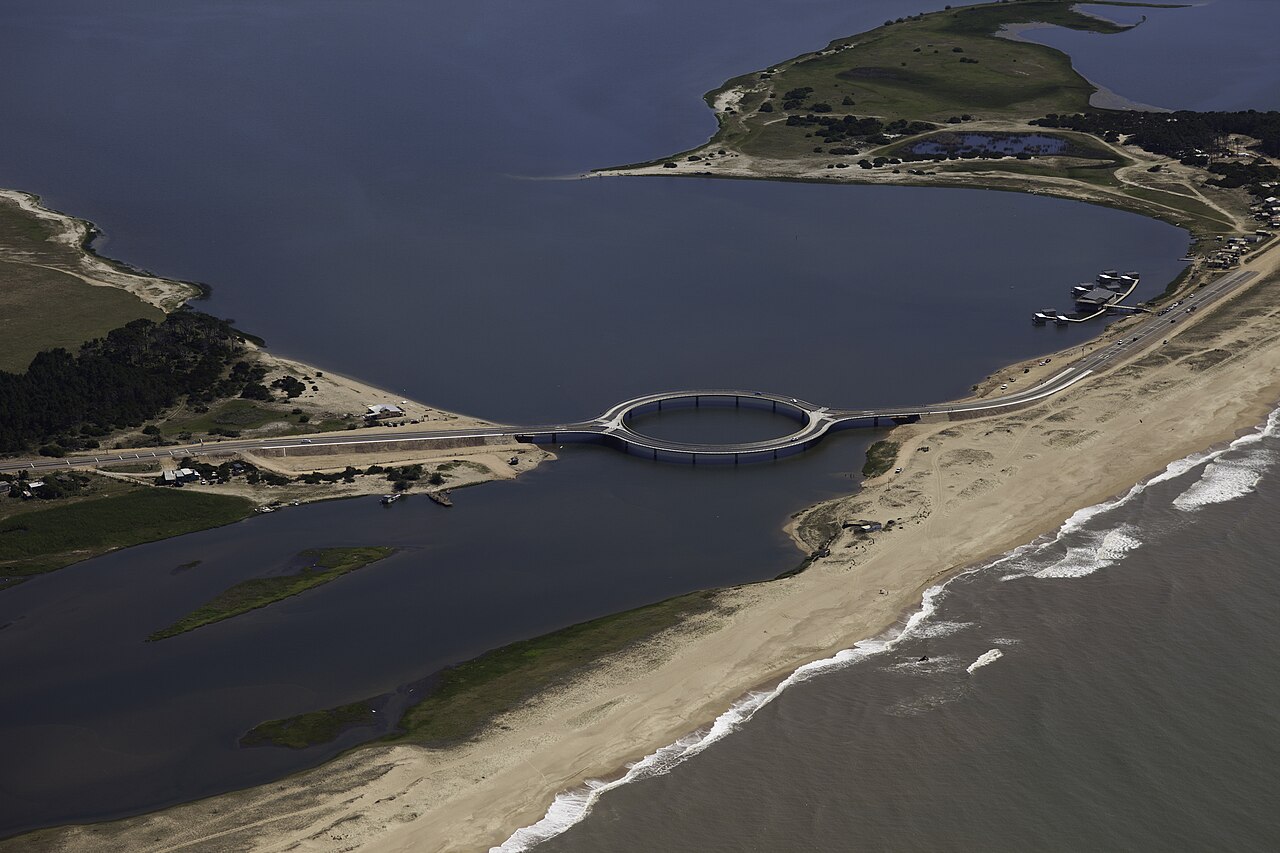
Winter doesn't empty out Laguna Garzón, but it does change who's around. The resident birds — cormorants, herons, swans, coots — stick around all year. The migratory shorebirds that fly down from the Northern Hemisphere, on the other hand, won't be back for a while yet.
The lagoon and the wetlands around it are recognized as an important area for bird conservation, according to Turismo Rocha, the regional tourism authority. That's part of why the spot draws both casual visitors and people keeping a running list of species: the mix of open water, reed beds and sandy shoreline supports resident waterbirds and passing migrants at the same time, just not always the same ones.
Who stays through winter: the biguá (neotropical cormorant) is a year-round resident here, commonly seen perched on posts or dead branches drying its wings after fishing. Herons (both the white and the grey-brown "garza mora"), the coscoroba swan and the black-necked swan, plus coots and several duck species, also stay put through the cold months — as the portal's earlier piece on the best season for birdwatching already covers.
Who's missing in winter: Arctic-breeding shorebirds — species like the American golden plover or the buff-breasted sandpiper — nest in North America during the northern summer, which happens to fall exactly during the southern winter. That means in August they're still up north; they typically show back up in the region come spring, when their non-breeding season in the south begins. Anyone specifically chasing those migratory species needs to wait a few more months. Anyone after the residents has a wide-open window, any time of year.
Winter has one underrated upside: far fewer people around. With less foot traffic on the shoreline, resident birds tend to sit still longer and let you get closer, especially early in the morning when the wind is calmer too. Days are shorter than in summer, so it's worth heading out close to sunrise to catch the low light and the quiet.
You don't need a boat or a guide to see any of this. Both shores of the lagoon — the Rocha side and the Maldonado side — have stretches where the water is visible from the road or from short walking paths, and a slow walk along the shoreline in the morning is usually enough to spot cormorants, herons and swans without any special gear beyond a decent pair of binoculars.
How to go: bring binoculars, keep your distance from nests and any restricted areas (required under local and Prefectura regulations), and avoid loud noise that could scare the birds off. The portal's birdwatching at Laguna Garzón listing covers guided outings on foot or by kayak that help with identification without disturbing anything. Traveling with kids, the bird watching with kids guide has tips suited to younger visitors. And if you're starting from scratch, the beginner's birdwatching guide covers which species to look for first, when to go and where to watch from.
Winter birdwatching pairs well with the rest of the off-season plans in the area: the guide to winter in José Ignacio and Laguna Garzón covers food, walks and short getaways to round out the day. You can also read up on the Laguna Garzón protected area, which explains the conservation framework behind these wetlands.
Sources: Turismo Rocha (Ministry of Tourism); previously published Portal Garzón reporting and listings.