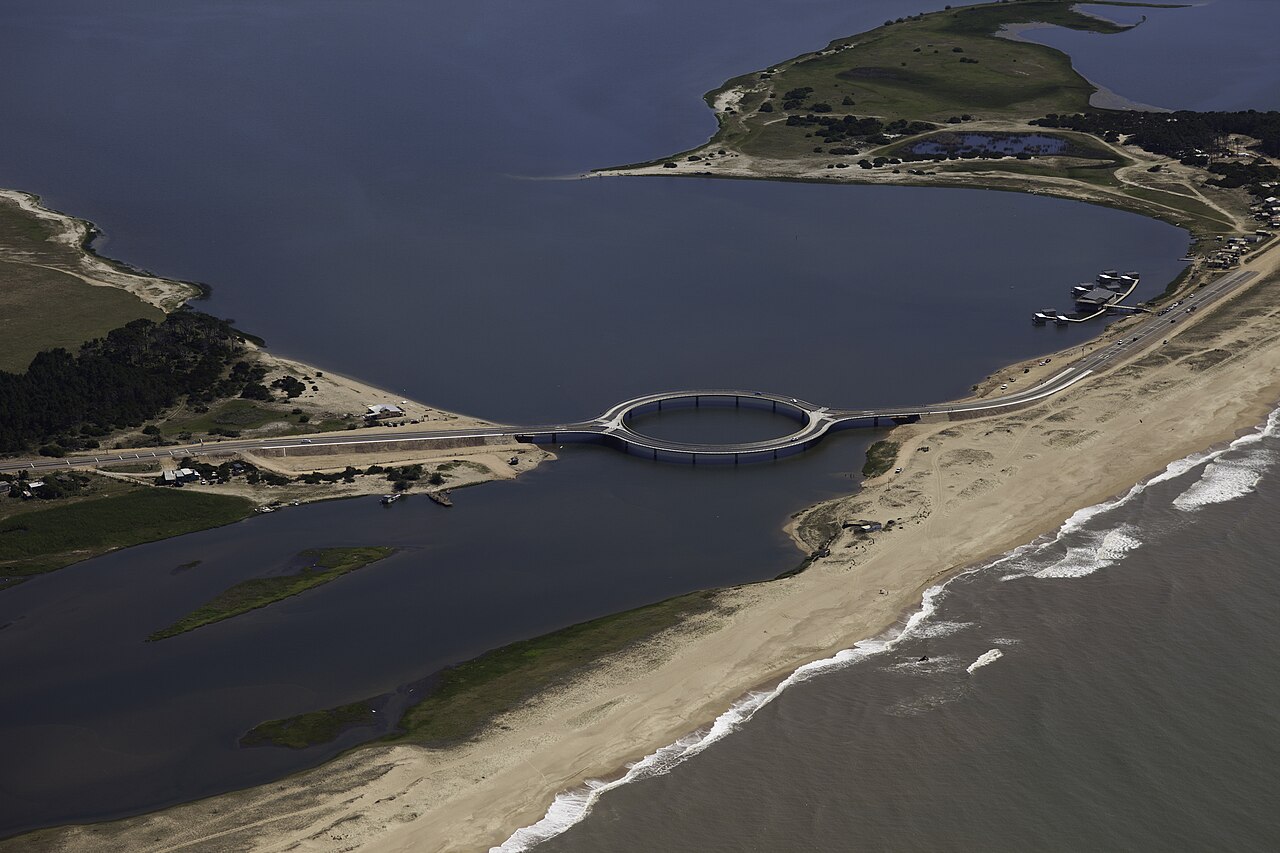
You don't need experience, a species list or expensive gear to start birdwatching at Laguna Garzón: the lagoon has been a protected area since 2014, its wetlands are recognized as an important bird conservation site, and the resident species — cormorants, herons, swans, coots, ducks — can be seen from the shore all year round, with the naked eye. All it takes is a slow walk along the shoreline, early in the morning or at sunset, scanning the water, the reed beds and the posts. This guide covers the basics: which birds to look for first, when to go, where to watch from and which rules apply in the protected area.
What makes Laguna Garzón so friendly for beginners is the mix of habitats packed into a small space: open water, reed beds and sandy shore, side by side. That variety supports resident water birds and passing visitors at the same time, and it explains why the lagoon draws casual observers as well as birders traveling with a checklist. There's another detail that helps newcomers: the lagoon's most visible birds are large and fairly confident, so your first sightings come quickly — and with them, the urge to keep going.
The first species to look for
Start with the residents, present in every season. The neotropic cormorant — known locally as the biguá — is one of the easiest: you'll often spot it perched on posts or dead branches with its wings spread open, drying off after fishing. The herons and egrets stand out from far away: the great egret with its snow-white plumage, standing motionless at the water's edge, and the larger, greyish white-necked heron with its slow, heavy flight. The swans are the most elegant silhouettes on the water: the black-necked swan, white with a dark neck, and the all-white, slightly smaller coscoroba swan. Rounding out the cast are the coots — dark, stubborn, always paddling along the reeds — and several species of ducks. Learn these six silhouettes and every walk along the shore becomes a birdwatching outing.
The migrants: the seasonal bonus
On top of that stable cast come the seasonal visitors. The migratory plovers and sandpipers — such as the American golden plover or the buff-breasted sandpiper — breed in North America during the northern summer and reach this region with the southern spring, spending their non-breeding season here. That's why spring and autumn usually bring the lagoon's greatest diversity: the travelers join the residents. If you're specifically after shorebirds, aim for those months; if the residents are enough, the window is open all year, as the portal's note on winter birds at Laguna Garzón explains.
When to go: season, time of day and wind
The seasonal rule is simple: spring and autumn for maximum variety, any month for the residents. Winter has an underrated advantage: with far less movement along the coast, the birds let you watch them more calmly and at closer range. Within the day, the best moments are early morning and sunset, when birds are most active; early hours also tend to bring less wind. On days with strong wind it's better to simply reschedule: the birds take cover, the water gets choppy and the outing turns uncomfortable. A calm, overcast day, on the other hand, can be perfect.
Where to watch from
The lagoon can be watched from the shore on both sides — the Maldonado side and the Rocha side — linked by the circular bridge. The publicly accessible stretches of shoreline near the sandbar and the bridge let you walk, stop wherever there's activity and head back at your own pace: for a first outing you don't need more. The logic of the walk is a watcher's, not a hiker's: move slowly, stop often, let your eyes sweep the water and the edge of the reeds. Outings by kayak or boat add another perspective and reach spots that are hard to access on foot — always at a respectful distance from the birds.
Minimal gear and how to behave
A beginner's kit fits in a small backpack: binoculars if you have them (lightweight; not essential), comfortable clothes in muted colors, footwear that can get wet, a hat, water and sunscreen. A notebook for jotting down or sketching what you see helps more than you'd think: it fixes what you've learned and builds your own list, outing by outing. The protected-area rules are few and clear: keep your distance from birds and nests, stay out of exclusion zones, avoid loud noises and leave no litter. Local regulations and the coast guard (Prefectura) enforce this, and the reason is simple: the lagoon works as a refuge and breeding ground, and the best observation is the one the bird never notices. The background is covered in the note on Laguna Garzón as a protected area.
With a guide: learn faster
Going out with someone who knows the species speeds everything up: one outing teaches what would otherwise take months. The portal lists the local options: the birdwatching outing at Laguna Garzón combines an easy trek of about 4 kilometers (2.5 miles) with roughly 3 hours of observation alongside a local guide; the guided walks through the protected area follow native trails with environmental education built in; and the Laguna Garzón ecotourism operator, based at La Playita on Route 10, works with certified nature guides specialized in ornithology and astronomy. If you also want to come home with photos, there are nature photography outings that adapt to any level of gear, phone cameras included; the photography guide to the area adds the other spots, the best light and the rules for photographing wildlife from a distance. Prices and bookings are on each listing.
Practical facts
- Resident species (year-round): neotropic cormorant, great egret, white-necked heron, black-necked swan, coscoroba swan, coots and ducks
- Migrants (spring and autumn): plovers and sandpipers, such as the American golden plover and the buff-breasted sandpiper
- Best time of day: early morning and sunset; skip days with strong wind
- Where from: accessible shoreline on both sides of the lagoon, near the sandbar and the circular bridge; also by kayak or boat, at a distance
- Gear: lightweight binoculars (optional), muted clothing, footwear that can get wet, water, hat, notebook
- Protected-area rules: distance from birds and nests, no loud noises, no entering exclusion zones
- Cost on your own: free; guided outings are booked through each portal listing
Frequently asked questions
Do I need experience or binoculars to watch birds at Laguna Garzón?
No. The lagoon's most visible birds — cormorants, herons, swans, coots — are large, stay close to the shore and can be identified with the naked eye. Binoculars add detail but are not essential to get started: walking slowly along the shore and scanning the water, the reed beds and the posts is enough.
Which birds can be seen year-round at Laguna Garzón?
The resident species are there in every season: the neotropic cormorant (biguá), the great egret and the white-necked heron, the black-necked swan, the coscoroba swan, coots and several species of ducks. They are ideal for a first outing because they are almost always around and easy to see from the shore.
When is the best time of year for birdwatching at the lagoon?
Spring and autumn usually bring the greatest diversity, because migratory shorebirds join the residents. The resident species are present all year, and winter has the advantage of far fewer people, so the birds let you watch them more calmly. Within the day, early morning and sunset are the best moments.
Should I explore on my own or book a guided outing?
Both work. On your own, the public stretches of shoreline let you see a lot at no cost. With a guide you learn to identify species and reach spots that are hard to access on foot: there are birdwatching walks, guided hikes through the protected area and operators whose guides specialize in ornithology. Some outings go out by kayak or boat.
What rules apply in the protected area?
Laguna Garzón has been a protected area since 2014. Local regulations require keeping your distance from birds and nests, staying out of exclusion zones and avoiding loud noises. The practical rule is simple: observe without interfering, from a distance and in silence.
Sources: Turismo Rocha, Laguna Garzón page (Important Bird Area); Decree 341/014 (entry of Laguna Garzón into the SNAP protected-area system, November 2014); links checked on October 2, 2026. Also notes and listings already published on Portal Garzón about birdwatching, winter birds and the protected area (citing Turismo Rocha, local regulations and the Prefectura), plus the listings of local guided-outing operators. Seasons and times are indicative: they depend on the weather and on each year.
Spotted an error? Write to hola@portalgarzon.com and we will fix it.