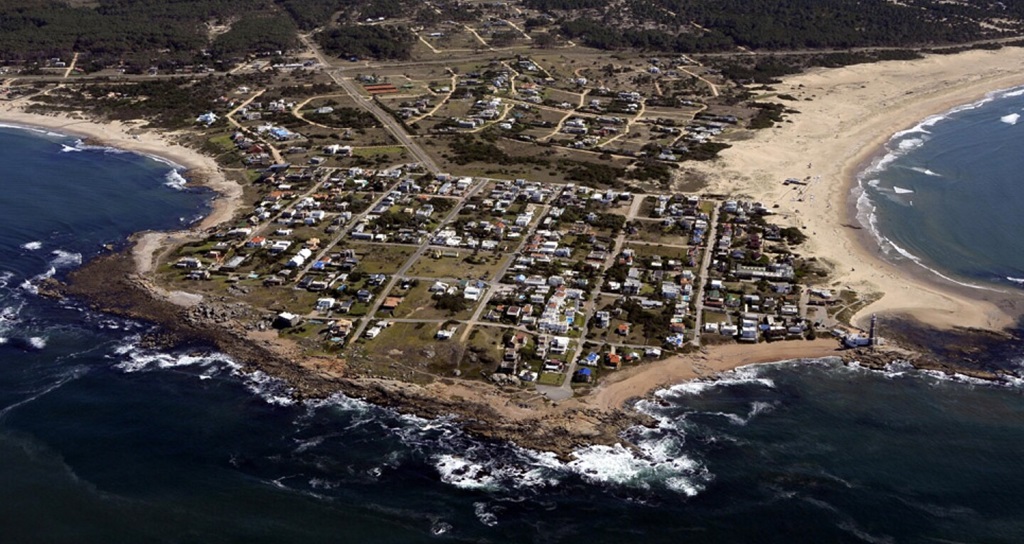
Watching right whales near Laguna Garzón requires no boat, no ticket and no guide: southern right whales pass the coast of Maldonado and Rocha roughly from July to October every year, and you watch them for free from land. The best results come from combining three things: a high spot facing the open ocean — the José Ignacio lighthouse is the classic one on this stretch —, a day with little wind and a flat sea, and the patience to wait for the V-shaped blow that gives the species away.
This guide gathers in one place what is spread across the portal's articles: when the season runs, which lookouts work near the lagoon, how to recognize a right whale, what to bring and which rules protect the animals. It is an evergreen guide: exact dates shift a little from year to year, but the cycle repeats every southern winter.
When: the season, year after year
Every winter, southern right whales migrate from subantarctic waters to the temperate seas off Uruguay, Argentina and southern Brazil to breed and calve. Off the Uruguayan coast the season runs from July to October, with the busiest stretch between July and September: those months bring mostly pregnant females or mothers with newborn calves, which look for calm waters close to shore. That is why sightings just beyond the breakers are not unusual — a mother and calf can turn up only metres from the beach. Towards October the animals resume their migration and encounters become less frequent. In some years other species arrive even earlier: the portal recorded a humpback sighting off La Barra as early as the start of May, a preview of the season to come.
Where to watch near Laguna Garzón
The general rule is simple: the higher your lookout, the farther away you can pick out a blow. The classic spot on this stretch is the lighthouse of José Ignacio, with an open view of the ocean across almost 180 degrees from the peninsula. The ocean beaches near the Laguna Garzón sandbar — where the lagoon meets the sea — also work well, as does any tall dune or bluff between José Ignacio and the lagoon. On the Rocha side, across the circular bridge, the coast stays just as open, with even fewer people.
If you want to widen the radius, the country's most famous lookouts lie farther east in Rocha: La Paloma and La Pedrera, thanks to their elevated rocky points, and beyond them Cabo Polonio, Santa Teresa and Cerro Verde. In Maldonado, Punta Colorada, Punta Negra and the Punta Ballena area are also often mentioned. The full run-down of the coast is in the article on the whale season along Rocha and Maldonado, and the specific lookouts of this stretch are covered in the piece on boat-free whale watching near José Ignacio.
How to recognize a right whale
The first thing you see is almost never the whale itself: it is the blow. A right whale's blow is V-shaped — it rises in two columns of vapour — and stands out from a long distance over a calm sea. After that you may spot the dark back with no dorsal fin (a key field mark: if the back has a fin, it is a different animal), the pale callosities on the head and, with luck, a breach or the tail lifted before a long dive. Right whales are slow and curious, swim close to shore and do not avoid shallow water — which is exactly why land-based watching works so well here.
How to watch: timing, weather and gear
The sea matters more than the clock: days with little wind and a flat sea multiply your chances, because the blow and the back stand out against a smooth surface. Within a calm day, early morning and late afternoon tend to be productive, and by mid-morning — with the sun already high — there is less glare on the water. The gear list is minimal: binoculars if you have them (not essential), a windproof jacket because the wind chill drops fast by the ocean, closed shoes for dunes and bluffs, and a thermos for the wait — locals bring mate, Uruguay's ubiquitous shared infusion. Patience is part of the plan: half an hour can pass with nothing, and then a mother and calf appear just beyond the breakers.
The rules: a sanctuary, watched from land
Uruguay declared its waters a whale and dolphin sanctuary, and regulations prohibit approaching the animals by boat, because harassment disturbs them at their most delicate stage: calving. On this coast, whale watching is done from land, which makes it doubly good — accessible to anyone, free of charge, and safe for the whales. If you see a boat harassing the animals, you can report it to the coast guard (Prefectura). The same look-but-don't-touch logic applies to Laguna Garzón itself, a protected area since 2014: here wildlife is watched from a respectful distance, at sea and on the lagoon alike.
Building a full day around the whales
Whale watching slots easily into a full day in the area. A proven plan: ocean first thing in the morning — lighthouse or dunes, when the sea is at its calmest —, then the lagoon, whose wetlands concentrate migratory and resident birds visible from the shore all year round. If you would rather go accompanied, the guided walks through the protected area are led by local guides who know the quiet access points along the shore. And if the day dawns grey or windy — bad for scanning the sea —, plan B lies inland: Pueblo Garzón and a visit to Bodega Garzón work even better in the cold, as the winter guide to the area explains.
Practical facts
- Season: roughly July to October; peak presence between July and September
- Cost: free — open watching from the shore, no tour or ticket needed
- Lookouts on this stretch: José Ignacio lighthouse, ocean beaches by the Laguna Garzón sandbar, tall dunes and bluffs
- Farther east: La Paloma, La Pedrera, Cabo Polonio, Santa Teresa and Cerro Verde, in Rocha
- Ideal conditions: little wind, flat sea, good visibility
- What to bring: binoculars if you have them, windproof jacket, closed shoes, a thermos
- Golden rule: watch from land; regulations prohibit approaching whales by boat
Frequently asked questions
When can you see whales in José Ignacio and Laguna Garzón?
Southern right whales pass the coast of Maldonado and Rocha roughly from July to October every year. Numbers usually peak between July and September, when the visitors are mostly pregnant females or mothers with calves looking for calm waters close to shore.
Do I need to pay for a tour or get on a boat to see whales?
No. On this coast whale watching is land-based and free: Uruguay declared its waters a whale and dolphin sanctuary, and regulations prohibit approaching the animals by boat. All you need is a high spot facing the ocean, a day with little wind and some patience.
How do I recognize a right whale from the shore?
The first thing you usually see is the blow, which in right whales is V-shaped and visible from a long way off. Then you may spot the dark back with no dorsal fin, the pale callosities on the head and, with luck, a breach or the tail as the whale dives.
What is the best time of day to watch?
Days with little wind and a flat sea matter far more than any particular hour. On a calm day, early morning and late afternoon tend to be good windows, and mid-morning, with the sun already high, there is less glare on the water.
What if I go and no whales show up?
Sightings are never guaranteed: half an hour can pass with nothing, and then a mother and calf appear right beyond the breakers. If you have no luck, the area offers an instant plan B: birdwatching on Laguna Garzón, guided walks through the protected area or a trip inland to Pueblo Garzón and its winery.
Sources: Turismo Rocha, whale watching (July-to-October season, Law 19.128 declaring a whale and dolphin sanctuary, and the ban on approaching whales by boat; link checked on October 2, 2026); articles already published on Portal Garzón about the whale season (citing Uruguay's Ministry of Tourism, the Maldonado departmental government and Turismo Rocha) and the area's winter guide. Season dates are approximate and repeat each year; there are no opening hours or fees because shore-based whale watching is free and open to all.
Spotted an error? Write to hola@portalgarzon.com and we will fix it.