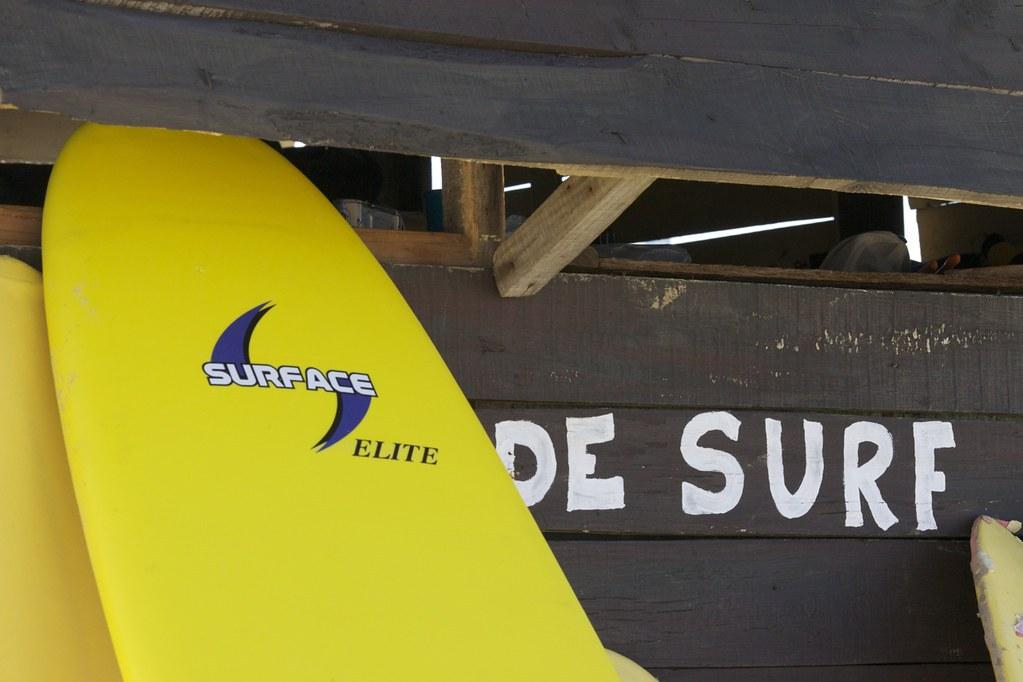
Where can a child take a first surf lesson near Laguna Garzón? The short answer: not in the heart of Playa Brava, but where the wave breaks small over a sandy bottom. The beach at La Juanita, with even waves that suit every level, and the inside of Playa Mansa are the natural places to start in the whitewater. Summer is the obvious window: the sea averages around 21 °C (70 °F) and municipal lifeguards are on duty. And there is a school right on the sand: Hopupu has been teaching on Playa Brava in José Ignacio since 1997, with private lessons or small groups and all levels welcome.
What you actually do
Drop one idea before you go: a child's first lesson is almost never about riding waves. It is about whitewater, the white foam left after the wave has already broken, which pushes towards shore without any drop in it. Everything that matters at the beginning is learned there, standing in waist-deep water rather than paddling out. The usual sequence starts on dry sand: how to lie on the board, where the hands go, how to move from lying down to standing in one motion. Only then does the class get in the water, with the instructor alongside pushing the board on each run. Schools use soft-top boards, wider and more buoyant than a regular surfboard, which forgive mistakes and do not hurt when they hit. When you book, ask what the lesson includes, such as board, wetsuit and rash vest, and what minimum age the school works with, since each one sets its own depending on the sea that day. In José Ignacio, the portal's listing for the surf school on the Atlantic Ocean sums up what Hopupu offers, covering José Ignacio, La Juanita and the Laguna Garzón area, open daily in season, with a reference price published and the time slot agreed by WhatsApp according to the state of the sea.
Where to go
José Ignacio is a peninsula with a lighthouse, and that geometry decides what each beach is good for. Playa Brava, east of the lighthouse, takes the ocean swell head on: it is the surf beach, home to the wave known as Pepe and to the school working on the sand between Parador La Huella and the lighthouse. It is an exposed beach break that works best with an offshore west-northwest wind, which is exactly why it is not the shoreline where you let a child splash about on their own: lessons happen on its inside section, with an instructor. Playa Mansa, on the other side, has calmer water and a gradual entry, and suits the youngest children who are still playing in the foam rather than surfing it. The third and most balanced option is the beach at La Juanita: even waves over a sandy bottom, without the power of the Brava or the stillness of the Mansa. All three are described in the listing for the Brava, Mansa and La Juanita beaches and compared in the guide on which beach to choose by waves, wind and company. Across the circular bridge, on the Rocha side, the beaches of El Caracol, Costa Bonita and El Bonete, between km 190 and 198 of Route 10, are wild ocean beaches with no beach clubs and no lifeguards: beautiful for walking, wrong for a first lesson.
When to come
The season matters more than any other variable, and because of the water rather than the waves. In summer the sea temperature at José Ignacio averages around 21 °C (70 °F) and ranges between 20 and 24 °C at its late-January peak: it is the only window in which a child can spend a couple of hours in the water and still enjoy it. In spring and autumn the water is clearly colder and a 3/2 mm wetsuit is needed; in midwinter it can drop close to 10 °C, which is thick-wetsuit territory for motivated adults, not for a child's first try. The other number worth checking is lifeguard cover: municipal lifeguards work only on the Brava and the Mansa, from mid-November to Easter week, which Uruguay calls Semana de Turismo. Within the day, mornings usually bring a tidier sea and less wind than afternoons, so the early hours are the friendliest for learning. If the sea looks big or messy, there is nothing to negotiate: the lesson moves to another day and the plan shifts to the calm water of the lagoon.
Tips for going with kids
Long-sleeve rash vest and sunscreen before getting in, and again afterwards: two hours of glare off the water burn far more than an afternoon under an umbrella. Bring water, fruit and a spare towel, because children come out of the sea hungry and cold at the same time. Reckon on 45 minutes to an hour of real attention; stretching a lesson beyond that usually ends in tears rather than progress. Always pick a stretch with lifeguards and read the flags before going in, even when your child is with an instructor. Nobody goes in alone, not even knee-deep, and the board is always carried on the seaward side so a wave cannot push it into their legs. If the first few runs make clear that what they love is flat water rather than waves, the area has a perfect plan B fifteen minutes away: La Playita at El Caracol on the lagoon, stand-up paddle in water shallow enough to stand in, a family kayak outing, or the sailing school A Pura Vela, which takes children out on catamarans on the Rocha shore. To close the day, the fresh fish at Tato Pescador is steps from the beach; and without a car, the José Ignacio taxis handle the trip there and back once the boards are returned.
Spotted an error? Write to hola@portalgarzon.com and we will fix it.