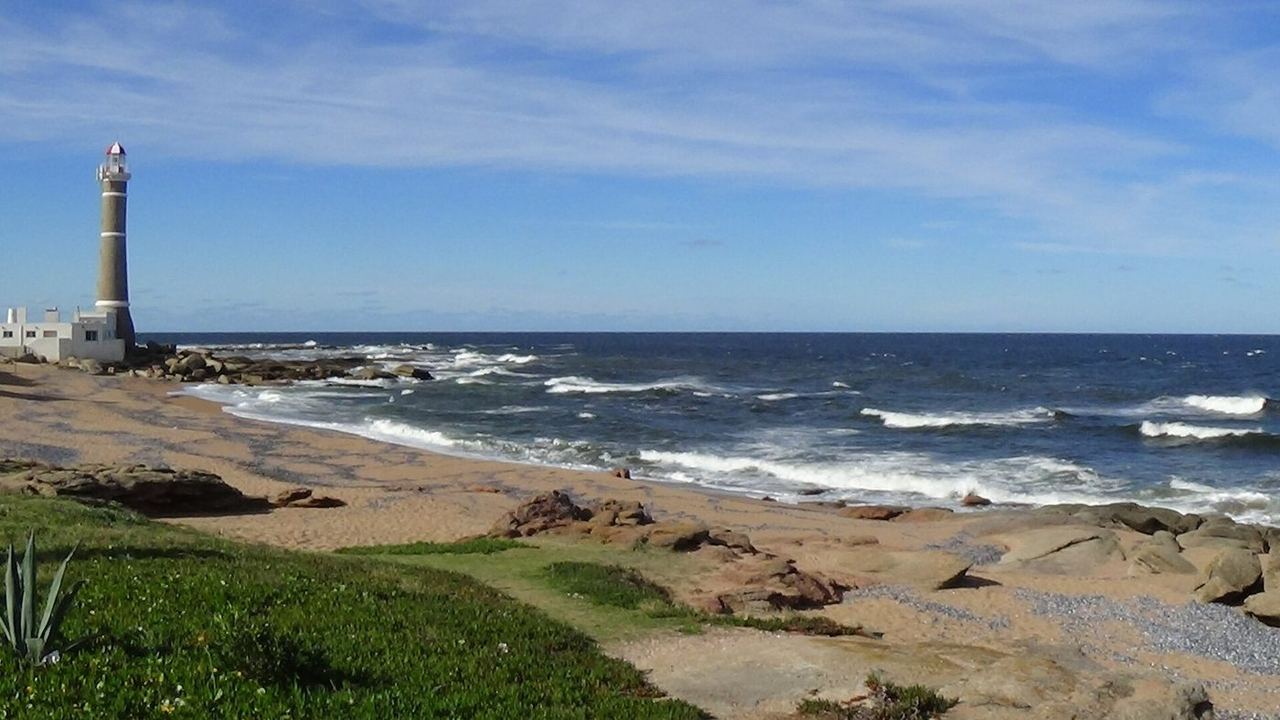
Choosing a beach here comes down to three questions: how much surf you want, which way the wind is blowing, and who you are with. José Ignacio has three beaches, each with its own character. Brava, east of the lighthouse, is the one for waves and surfing. Mansa, to the west, has the calm water, the beach restaurants and the sunset crowd. The beach at La Juanita, towards the mouth of the lagoon, has even waves over a sandy bottom that suit every level. On the Rocha side, past the circular bridge, come the wilder ocean beaches of El Caracol, Costa Bonita and El Bonete, with no services at all. And if you want no waves whatsoever, the answer is not the sea but the lagoon: La Playita at El Caracol. Lifeguards cover only Brava and Mansa, from mid-November until Tourism Week.
The area has one quirk worth understanding before you set out: within a few kilometres you get open ocean, sheltered ocean and lagoon water. That means there is almost never a bad beach day here — only a day when one beach works better than another. The same strong wind that ruins the umbrella on one shore turns the next one along into the best plan of the summer. This guide lays out the options so that someone arriving cold can decide in two minutes.
The three beaches of José Ignacio
José Ignacio is a peninsula with a lighthouse, and that geometry explains its beaches. Playa Brava lies east of the lighthouse and takes the ocean swell head-on: it is the surf beach, home to the break known as Pepe and to the Hopupu surf school working right on the sand. It is wide, windy and has a proper shore break. It is not the first choice for a quiet swim, but it is the best one for watching the sea or getting in with a board. If the person getting in with a board is a child, read first how a child's first surf lesson works: it happens in the whitewater, not on the peak.
Playa Mansa sits on the other side, to the west, and lives up to its name — "mansa" means tame. The water is calmer, the entry more gradual, and the cluster of beach restaurants makes it the busiest sunset spot in the area. It is the beach most families pick and the one that pairs best with a long lunch in the village. The third is the beach at La Juanita, towards the mouth of the lagoon: even waves over a sandy bottom, without Brava's power or Mansa's stillness, which makes it the most versatile of the three. All three are described in the listing for the Brava, Mansa and La Juanita beaches, with conditions and lifeguard season.
Past the bridge: the Rocha beaches
Cross the circular bridge over Laguna Garzón and the landscape changes abruptly. Between kilometres 190 and 198 of Route 10, now in the Rocha department, come the ocean beaches of El Caracol, Costa Bonita and El Bonete: long sand, dunes, native woodland and very few people, all publicly accessible and inside the protected area. This is the choice for anyone who wants to walk for kilometres without meeting a soul.
The price of that solitude is services: there are no beach restaurants and no lifeguards, and the protected-area rules are strict — no camping, no fires, no vehicles on the dunes. Bring your own water, food and shade, and check the rules at the Laguna Garzón visitor centre. The listing for the El Caracol, Costa Bonita and El Bonete beaches has the access details.
The no-waves option: the lagoon
When the ocean will not do — because whoever is coming cannot swim yet, because there is a heavy shore break, or simply because nobody feels like fighting the surf — this area holds a card almost no other stretch of the Uruguayan coast can play: a lagoon beach. La Playita at El Caracol sits on Laguna Garzón, on the Rocha side, about three kilometres past the bridge, near kilometre 193 of Route 10. It is fresh water, calm, with no current and no break, over a sandy bottom so shallow you can stand across almost the whole stretch of water. Access is free and open all year, and it is also the best sunset spot on the Rocha shore. The piece on La Playita at El Caracol with children explains how to get there and what is nearby.
The area's other patch of still water is at the opposite end: Laguna José Ignacio, 14 km² of it, west of the village between kilometres 176 and 179 of Route 10. It is not a classic swimming beach — it is a bird lagoon, with flamingos and black-necked swans — but its wind conditions make it a kite and windsurf spot all year, as does Laguna Garzón for kitesurfing.
The wind decides: how to read it before you go
On the Uruguayan Atlantic coast the wind shapes a beach day more than the temperature does. The local rule of thumb rests on geography: since Brava faces east and Mansa faces west, an easterly usually leaves Mansa more sheltered, and a westerly or south-westerly flips the relationship. Having both beaches ten minutes apart on foot is José Ignacio's concrete advantage: if one is unbearable, the other probably is not.
Wind changes the water too, not just the sand. Steady onshore wind tends to leave messy swell and more current; offshore wind tends to smooth the surface and clean the water up. And there is an upside to it: the same days that drive the umbrellas away are the good ones for kite and windsurf on both lagoons. Before setting out, check the wind forecast and not only the sun, and keep a plan B ten minutes away by car.
Lifeguards, flags and the season
The single most important safety fact is also the most concrete: the Maldonado departmental government staffs Brava and Mansa beaches in José Ignacio with municipal lifeguards, from mid-November until Tourism Week, the Uruguayan Easter holiday that closes the summer season. In November the service usually runs from 11am to 6pm; from December, 9.30am to 7.30pm. The details are in the listing for the José Ignacio lifeguard service. No other beach in the area has permanent lifeguards, and that includes La Juanita and the whole Rocha coast.
Where there are lifeguards there are flags, and the flag rules: green allows swimming, yellow asks for caution, red bans entering the water. It changes through the day with the sea, so check it on arrival rather than trusting how the water looked a while ago. The departmental governments publish each beach's bathing status in season, as covered in the piece on beaches approved for swimming and Blue Flag sites in Rocha and Maldonado. Out of season the framework changes completely: with no lifeguards on duty, the precautions set out in the piece on beaches without lifeguards in the area become all there is.
Who you are with: the last question
With very small children the lagoon wins every time: La Playita has no shore break and no current. With children who already swim, Mansa in season is the sensible call, because it is the only combination of gentle ocean and lifeguards; the piece on safe beaches for children goes into it. If the plan is surfing, Brava and La Juanita; if it is kite or windsurf, the lagoons. If the plan is a sunset with people and something to drink, Mansa in José Ignacio or La Playita on the Rocha side, depending which side of the bridge you are on.
And if the beach is half the day, the other half is close by: a few minutes from the lighthouse is the seafood cooking of Tato Pescador, and the guide to where to eat in the area sorts the rest by where you happen to be standing. To get around without your own car, the José Ignacio taxi service is the most direct route; and if you are driving, the ANCAP service station in José Ignacio, open 24 hours, is the last one before Rocha.
Practical details
- Playa Brava (José Ignacio): east of the lighthouse, waves and surf, surf school on the sand, lifeguards in season
- Playa Mansa (José Ignacio): west of the lighthouse, calm water, beach restaurants, sunset, lifeguards in season
- La Juanita beach: towards the mouth of the lagoon, even waves over sand, no lifeguards
- El Caracol, Costa Bonita and El Bonete (Rocha): Route 10 km 190–198, wild ocean beaches, free access, no services
- La Playita at El Caracol: on the lagoon, no waves or current, near km 193, free and open all year
- Laguna José Ignacio: Route 10 km 176–179, 14 km², kite and windsurf spot all year
- Lifeguards: Brava and Mansa, mid-November to Tourism Week (November 11am–6pm; from December 9.30am–7.30pm)
- Flags: green allows swimming, yellow asks for caution, red bans it
- Protected area (Rocha side): no camping, no fires, no vehicles on the dunes
Frequently asked questions
Which is the calmest beach in José Ignacio?
Mansa, west of the lighthouse, has the calmest water on the peninsula, with beach restaurants nearby and the most popular sunset spot in the area. If you want water with no waves and no current at all, the calmest option around is not the sea but the lagoon: La Playita at El Caracol, on Laguna Garzón, on the Rocha side.
Which beaches in the area have lifeguards?
The municipal lifeguard service run by the Maldonado departmental government covers Brava and Mansa beaches in José Ignacio during the season, from mid-November until Tourism Week (the Uruguayan Easter holiday). In November the service usually runs 11am to 6pm, and from December 9.30am to 7.30pm. No other beach in the area has permanent lifeguards.
Can you go to the beach out of season?
Yes. Every beach in the area is public and free all year round. What changes out of season is that there are no lifeguards on duty and no beach restaurants open, so it is wise not to swim alone, to tell someone where you are going, and to bring water and a windproof layer.
Which beach works best with small children?
For babies and children who cannot swim yet, La Playita at El Caracol is the easiest: it is lagoon water, with no waves and no current, and a sandy bottom so shallow you can stand across most of the water. It sits on Route 10, about three kilometres past the circular bridge. If you want the ocean instead, Mansa in José Ignacio is the gentlest and, along with Brava, the only one with lifeguards.
What do the beach flags mean?
Green means swimming is allowed, yellow means caution and red means stay out of the water. The lifeguard raises the flag and changes it through the day as the sea changes, so check it when you arrive rather than trusting how the water looked earlier. Beaches without lifeguards have no flag: there the call is yours, and it pays to be conservative.
Sources: Intendencia de Maldonado (departmental government), start of the 2025-26 lifeguard season (notice dated November 17, 2025: weekends in November and daily from December until the end of Semana de Turismo, Holy Week; 11 a.m. to 6 p.m. in November and 9:30 a.m. to 7:30 p.m. from December, from Solís Grande to José Ignacio); Turismo Rocha, Laguna Garzón page (access via the El Caracol, Costa Bonita and El Bonete beach villages; protected area; motorised water sports prohibited); Decree 341/014 (IMPO) (Laguna Garzón's entry into the national protected-areas system, November 21, 2014); links verified October 3, 2026. Also the listings and articles already published on Portal Garzón about the José Ignacio beaches, the El Caracol, Costa Bonita and El Bonete beaches, Laguna José Ignacio, the municipal lifeguard service and each season's approved beaches (which cite the Maldonado and Rocha departmental governments and the Blue Flag certification). Photo: Casaseneleste (CC BY-SA 4.0). Hours and season dates are indicative: confirm them before you go.
Spotted an error? Write to hola@portalgarzon.com and we will fix it.